Why Custom Masonry Is the Foundation of Luxury Outdoor Living
A luxury outdoor space can be beautifully designed on paper and still fall short in person. The difference is almost always in the masonry. The stone walls, the fireplace, the steps, the built-in features are not decorative additions. They are the structural and aesthetic core that the rest of the design is built around.
Custom masonry work for luxury outdoor spaces is a different discipline than standard residential construction. It starts with the site, accounts for the property’s architecture and landscape, and requires a level of craft in execution that standard installation does not. On a Napa Valley property where the outdoor environment is often as considered as the interior, that distinction matters.
This is a look at what custom masonry actually involves, where it shows up across a luxury outdoor project, and why the quality of that work determines the long-term value of everything built around it.
What Sets Custom Masonry Apart From Standard Work
Standard masonry follows a template. Modular materials, repeatable patterns, speed-optimized installation. The goal is a finished product that meets spec and passes inspection.
Custom masonry starts somewhere different. Before a single stone is placed, a professional reads the property. Elevation changes, drainage patterns, existing architecture, and the client’s design vision all shape the approach. The specification follows the site, not the other way around.
The execution reflects that difference in ways that are both visible and structural:
- Hand-selection of materials for color consistency, surface texture, and fit
- Field adjustments during installation to account for grade changes and material variation
- Tight tolerances at joints, corners, and transitions that factory-produced systems cannot replicate
- Integration with drainage, substrate, and structural requirements specific to the site
The word “custom” in this context means site-specific and craft-executed. It is not a premium price tag applied to standard work.
The Materials Used in Custom Masonry Work
Material selection is one of the defining characteristics of artisan masonry. Where standard construction reaches for precast concrete or manufactured veneers, custom masonry work draws from a different palette.
The materials most common in Napa Valley luxury outdoor projects include:
- Natural stone including bluestone, travertine, and flagstone, each selected for how it performs in the region’s climate and how it reads against the surrounding landscape
- Brick for applications where the design calls for a more structured, traditional character
- Fieldstone set dry-stacked or mortar-set, depending on the structural requirements and the aesthetic intent of the project
- Reclaimed materials sourced for projects where authenticity and patina are part of the design brief
A professional does not select materials from a catalog. Color variation, surface texture, and how individual pieces will fit together are all evaluated before anything arrives on site. The material has to work as a system, not just as a sample.
Density, porosity, and how a material responds to Napa Valley’s climate all factor into what gets specified for a given application. That evaluation happens before the aesthetic conversation, not after it.
Where Custom Masonry Forms the Foundation of a Luxury Outdoor Space
Custom masonry is not limited to a single feature. It shows up across the entire outdoor environment, and in each application it is doing structural and aesthetic work at the same time.
Retaining Walls and Structural Elements
Retaining walls are where masonry is most visibly structural. On Napa Valley properties with significant elevation changes and sloped terrain, a well-built retaining wall is what makes the rest of the outdoor design possible. It is not a background element.
A custom-built retaining wall is engineered for the site:
- Drainage is designed into the structure, not addressed after the fact
- Soil load and slope angle determine the depth and composition of the foundation
- Material selection accounts for both structural performance and long-term appearance
A retaining wall in a luxury project is often the first major design element a visitor encounters. The coursing, the finish quality, and the material set the tone for everything that follows.
Outdoor Fireplaces and Fire Pits
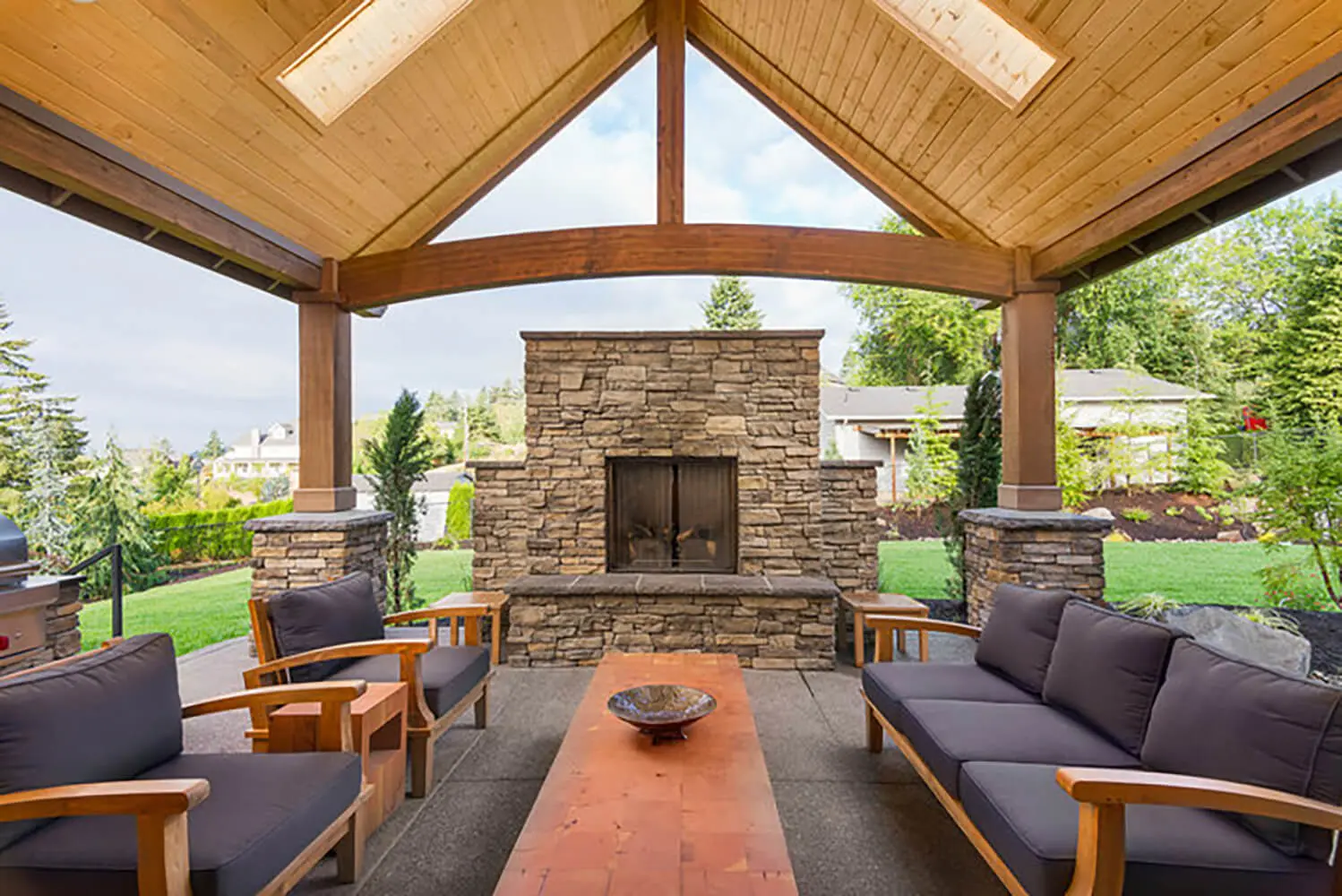
An outdoor fireplace or fire pit built with custom masonry is a permanent architectural feature. It is not a prefabricated insert dropped into a stone surround.
The craftsmanship is in how the structure integrates with everything around it. Proportion, material continuity, and the quality of the stonework determine whether the fireplace reads as a designed element or something added on after the fact. A structure that looks like it belongs took deliberate work to achieve.
A custom-built fireplace also performs differently than a prefabricated unit. The firebox dimensions, the draw, and the structural integrity are built to the application, not to a price point.
Pathways, Steps, and Transitions
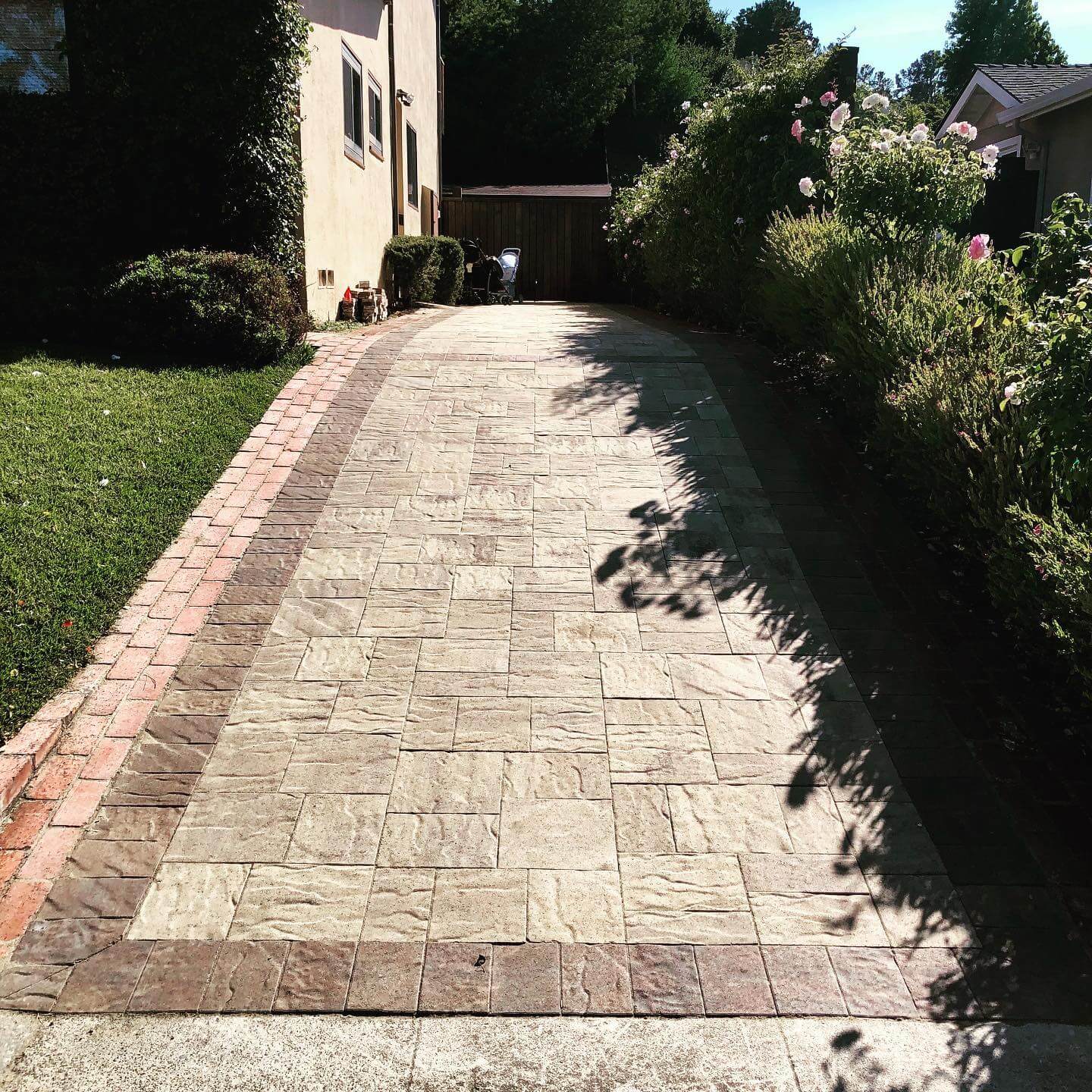
Pathways and steps are where masonry craftsmanship is most tactile. These are the surfaces guests walk on and experience up close. The quality of the work at this scale is impossible to miss.
A custom mason accounts for several factors when designing these elements:
- Natural grade changes and how the pathway reads as it moves through the landscape
- Drainage and how water moves across and away from the surface
- The visual flow between outdoor zones and how transitions feel underfoot
Transitions between materials are where the difference between artisan work and standard installation becomes most apparent. Stone to wood, stone to lawn, stone to water, each requires precise detailing that either holds together or does not.
Outdoor Kitchens and Built-In Features
Outdoor kitchens and built-in features sit at the intersection of masonry craft and functional design. The structure has to perform under heat, weather exposure, and regular use. Looking the part is not enough.
A custom masonry outdoor kitchen is built around the specific demands of the property:
- Appliance layout and clearances are built in, not worked around
- Countertop thickness and surround materials are specified to the use and the aesthetic
- Finish details are consistent with the rest of the outdoor environment, not selected independently
A masonry-built outdoor kitchen is a permanent feature. It contributes to the architectural value of the property in a way that a modular or prefabricated unit does not. It is construction, not furniture.
Why Custom Masonry Holds Up in Napa Valley’s Climate
Durability in custom masonry comes from two places: material quality and installation precision. Both have to be present. One without the other produces a finished product that degrades faster than it should.
Napa Valley’s climate puts real demands on outdoor masonry. Warm, dry summers and wet winters create thermal cycling. Frost in inland and higher-elevation areas adds freeze-thaw stress. A professional specifies and installs with those conditions as the baseline, not as variables to account for later.
The craft decisions that determine long-term performance happen during installation and are invisible once the work is complete:
- Mortar selection matched to the material and the climate exposure
- Joint depth and profile designed to shed water rather than collect it
- Drainage integration built into the substrate before the first stone is set
- Substrate preparation that accounts for soil movement and seasonal expansion
A patio or fireplace that holds its appearance and structural integrity for decades is a fundamentally different value proposition than one that requires ongoing repair. The durability of custom masonry is not just a structural benefit. It is what protects the design investment over time.
The Visual Impact of Artisan Stonework
Visual impact in artisan masonry is not about choosing an expensive material. It is about how the material is specified, detailed, and installed in relation to everything around it.
The elements that create visual impact in a finished masonry installation include:
- Coursing patterns and how they direct the eye across a surface
- Joint width and depth and how shadow lines read at different times of day
- Surface texture variation and how it responds to light across seasons
- Edge and corner detailing and how the stone terminates cleanly at transitions
- Material continuity and how the masonry reads as a system rather than a collection of individual features
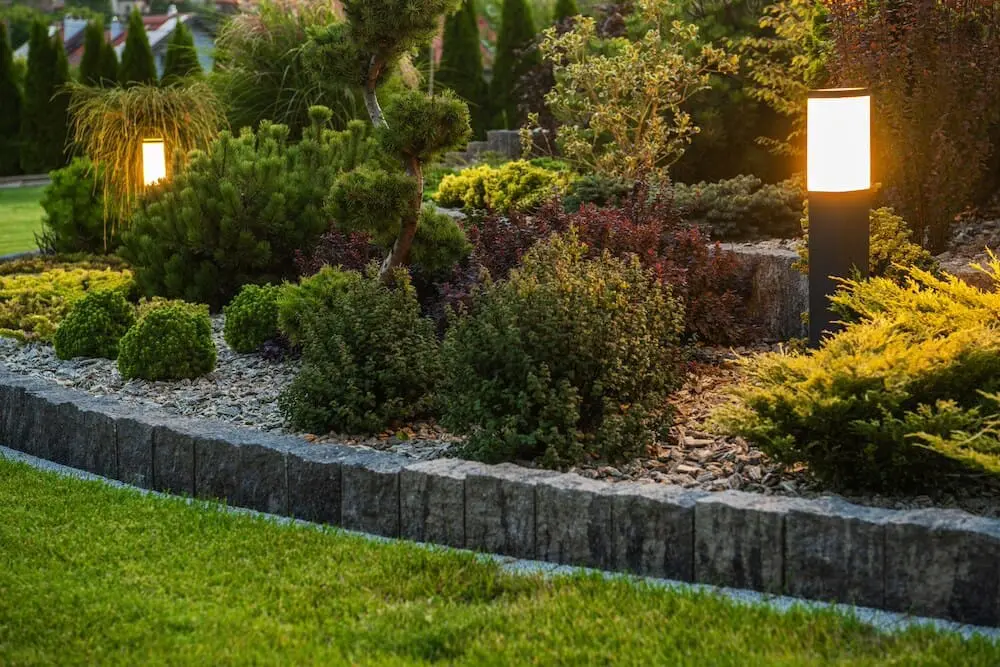
In Napa Valley, artisan stonework reads well against the region’s natural palette. The warm tones of the hillside landscape, the weathered wood and iron details common in wine country design, the low horizontal lines of the terrain all create a context that well-specified masonry reinforces rather than competes with.
The visual impact of well-executed masonry is cumulative. A well-set capstone, a precise corner return, a cleanly finished joint, none of these call attention to themselves individually. Together they produce a finished environment that communicates craftsmanship without announcing it.
What Custom Masonry Makes Possible for Your Property
Custom masonry is not a line item in a luxury outdoor budget. It is what makes the rest of the design possible and worth investing in. The retaining wall that creates the terrace, the fireplace that anchors the gathering space, the pathway that connects the zones, all of it depends on the quality of the masonry work underneath and behind it.
What that work makes possible is specific to the property. The site conditions, the design intent, and how the outdoor space gets used all shape what custom masonry ultimately delivers. There is no standard answer because there is no standard site.
At Keystone Yards, we build custom masonry work around the specific demands of each property. If you are planning a luxury outdoor project in Napa Valley and want to understand what artisan stonework and masonry could make possible for your space, contact us today to start the conversation.