
How to Plan a Luxury Outdoor Living Project With Financing in Mind
Planning a luxury outdoor living project is exciting, but for many homeowners, the biggest uncertainty isn’t design — it’s how to pay for it without stress or surprises. Custom features, premium materials, and detailed craftsmanship can quickly increase costs, which is why many homeowners start thinking about how to plan a luxury outdoor living project with financing in mind before design decisions are finalized.
Early questions tend to revolve around budget and timing. How much should be set aside for the project? Which features have the biggest impact on cost? When should financing be secured to avoid delays or redesigns? Without clear answers, it’s easy to move forward with a vision that doesn’t fully align with financial reality.
Taking financing into account from the start helps create a smoother planning process. When goals, budget, and funding strategy are considered together, design decisions become clearer and more intentional. This approach allows homeowners to move forward with confidence, knowing their outdoor living space is planned in a way that supports both their lifestyle and their long-term financial comfort.
Define Your Outdoor Living Goals Before Setting a Budget
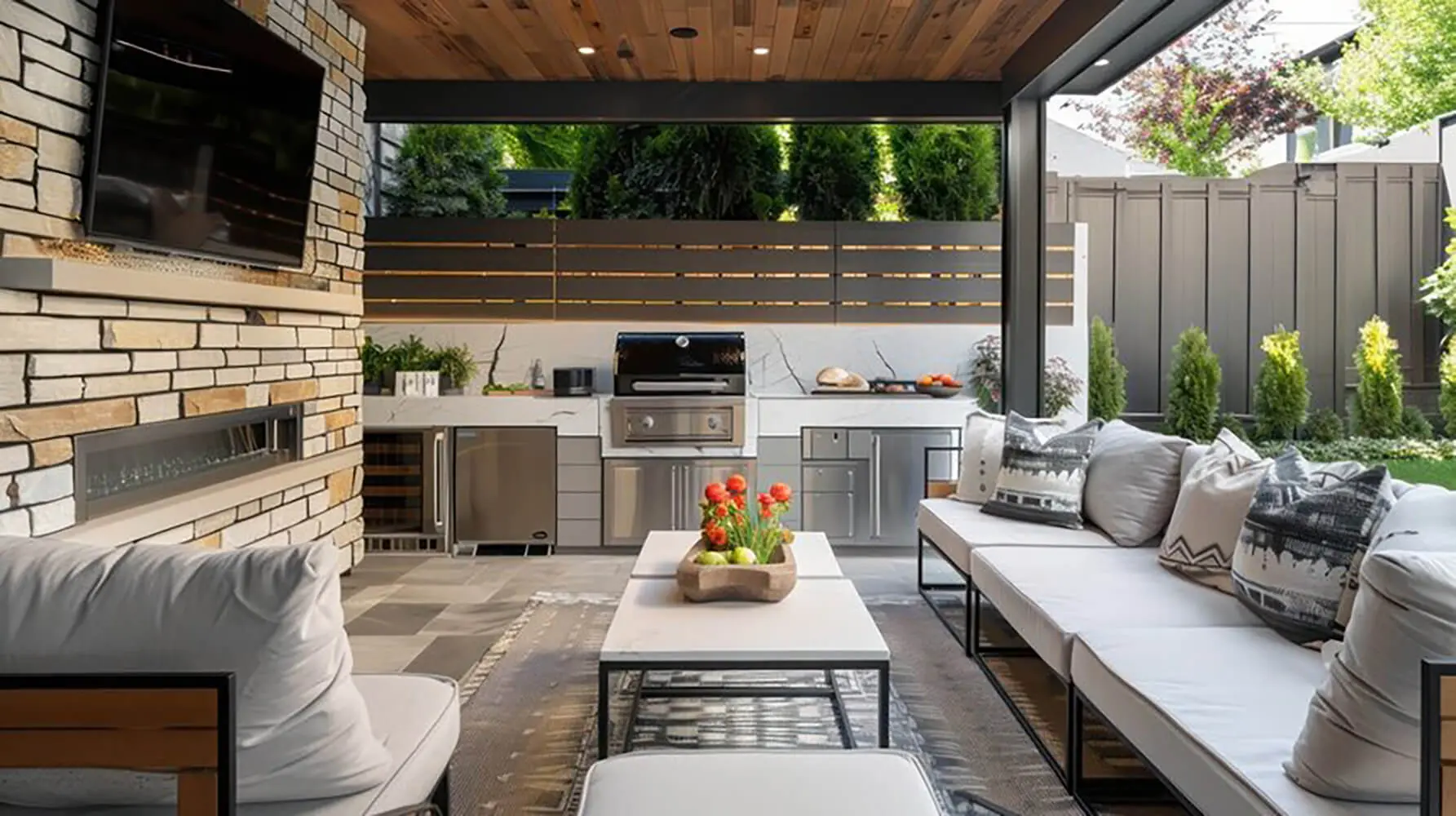
A clear vision is the foundation of every successful luxury outdoor living project. Before numbers, loans, or timelines come into play, homeowners benefit from stepping back and defining what the space is meant to accomplish. Outdoor kitchens, covered patios, pools, fire features, and full backyard transformations all serve different purposes and come with very different cost implications.
Lifestyle plays a major role at this stage. A space designed primarily for entertaining large groups will be planned differently than one focused on quiet relaxation or family use. Factors like layout, materials, and how the space connects to the home all influence early decisions, similar to the considerations homeowners face when planning a luxury deck or patio.
Separating must-have elements from optional upgrades is especially important early on. This distinction helps guide later decisions if trade-offs are needed. When goals are clearly defined first, every financial conversation that follows is grounded in purpose rather than guesswork, reducing the risk of overbuilding or constant redesign.
Estimate a Realistic Cost Range for a Luxury Outdoor Living Project
Luxury outdoor projects rarely fit into neat price brackets. Costs can vary significantly based on size, materials, craftsmanship, and site conditions. Estimating a realistic range early helps homeowners align expectations before design work begins.
Rather than focusing on a single number, planning with a range accounts for variables that may not be fully visible at the start. Sloped yards, drainage needs, utility extensions, and custom construction details often reveal themselves as planning progresses. A realistic range leaves room for these factors without derailing the project.
Understanding that luxury outdoor spaces are closer to home additions than simple upgrades helps reset expectations. Premium materials, skilled labor, and coordination across trades all contribute to higher costs. When homeowners approach planning with this perspective, financing conversations become more productive and less reactive.
Break Down the Major Cost Components of a Luxury Outdoor Build
Knowing where money is typically spent makes financial planning more concrete. Luxury outdoor living projects are made up of several interconnected cost components, each influencing the total investment.
Design and planning costs often come first. These include conceptual design, construction drawings, and coordination needed to bring complex outdoor spaces to life. Construction and labor typically represent a significant portion of the budget, especially for custom masonry, carpentry, and structural work.
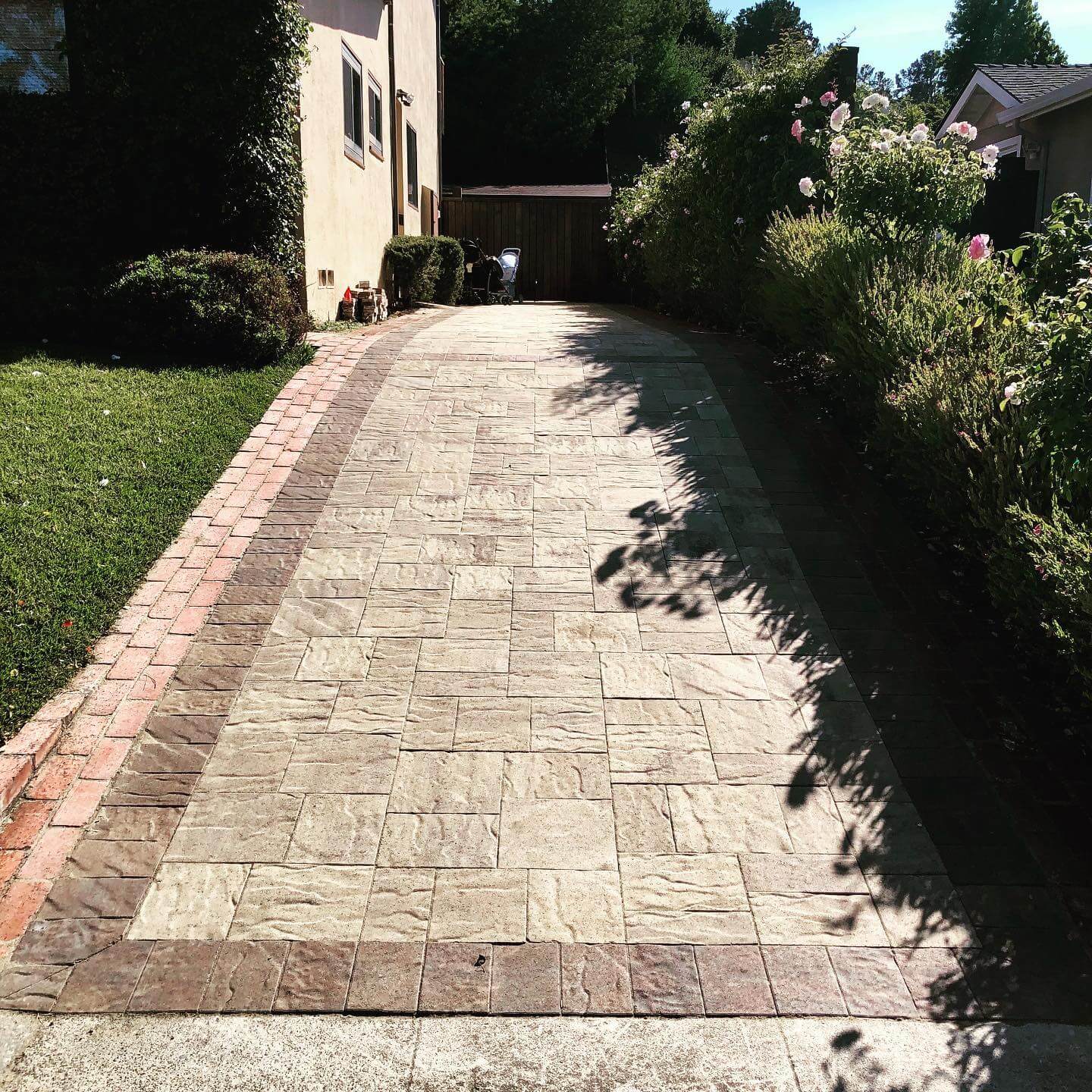
Materials and finishes are another major cost driver in luxury outdoor projects. Natural stone, premium pavers, custom masonry, and high-end finishes can significantly influence the overall budget depending on availability and installation complexity. Understanding how different hardscaping materials affect both appearance and cost helps homeowners make informed decisions early, especially when planning within financing limits.
Seeing the project as a collection of cost categories rather than a single price tag helps homeowners make informed decisions when balancing scope and financing.
Decide How to Finance Your Project Based on Budget, Timeline, and Scope
Financing decisions shape more than monthly payments — they influence design choices, construction sequencing, and overall flexibility. Homeowners often weigh cash payments against financing some or all of the project depending on available equity, long-term plans, and comfort level.
Several common financing paths are typically considered:
- Paying fully or partially in cash to minimize borrowing while retaining flexibility.
- Using home equity options, such as loans or lines of credit, to spread costs over time.
- Exploring renovation or construction loans designed for larger improvement projects.
- Considering cash-out refinancing when aligning an outdoor project with broader financial goals.
Project timeline matters here. Some financing options require approvals or appraisals that can affect when construction begins. Others offer quicker access but may come with different terms. The scope of the project also plays a role, as larger builds often benefit from financing structures that align with staged payments.
Financing decisions shape more than monthly payments — they influence long-term value as well. A well-planned outdoor project often adds lasting enjoyment and contributes to overall home value, which is why many homeowners view custom outdoor living spaces as a smart investment rather than a short-term upgrade. Keeping that perspective in mind helps frame financing as part of a broader home improvement strategy, not just a cost to manage.
Adjust or Phase Your Project to Fit Financing Limits
Not every luxury outdoor vision needs to be built all at once. When financing limits come into play, adjusting scope or phasing construction can preserve the overall design while keeping costs manageable.
Scaling back doesn’t always mean sacrificing quality. In many cases, prioritizing high-impact features delivers the desired experience without stretching finances too thin. For example, completing structural elements and core hardscaping first allows additional features to be added later without disruption.
Phased planning works best when the full vision is designed upfront. This approach ensures utilities, foundations, and layouts support future additions. Features commonly phased include secondary seating areas, water features, or specialty amenities that can be added once financing or budgets allow.
This strategy prevents short-term financial constraints from permanently limiting the long-term potential of the space.
Confirm Financing Early to Prevent Construction Delays
Finalizing financing before construction begins is one of the most effective ways to avoid delays. Late approvals, unexpected documentation requests, or funding gaps can stall projects that are otherwise ready to move forward.
Contractors and design-build teams rely on predictable payment schedules to coordinate labor, materials, and inspections. When financing is secured early, timelines remain stable and scheduling conflicts are minimized. Homeowners are also better positioned to make confident decisions without pausing progress to revisit funding.
Having financial information organized ahead of time streamlines lender conversations and keeps the project moving smoothly once construction is underway.
Coordinate Financing Decisions With a Design-Build Team
Design-build teams play a critical role in aligning financial reality with design ambition. Accurate estimates, realistic timelines, and early identification of cost drivers help homeowners avoid surprises during financing discussions.
When design and construction are coordinated from the start, budgets are informed by real-world build considerations rather than conceptual assumptions. This reduces the likelihood of change orders caused by underestimating complexity or material costs.
Close coordination also allows teams to suggest alternatives that maintain quality while respecting financing limits. For luxury outdoor projects, this integrated approach often leads to better outcomes than treating design, budgeting, and financing as separate steps.
How Financing-Aware Planning Sets Your Outdoor Project Up for Success
Planning a luxury outdoor living project with financing in mind creates clarity at every stage. When goals, budget, and funding strategy are aligned early, design decisions become more focused and construction flows more smoothly.
Financing-aware planning reduces stress by eliminating last-minute compromises and unexpected pauses. It allows homeowners to commit to a vision that fits both their lifestyle and their financial comfort.
By approaching outdoor living projects with a clear plan and the right professional support, homeowners set themselves up for a finished space that delivers long-term enjoyment, value, and confidence from the first conversation to the final walkthrough.
How to Plan a Luxury Outdoor Living Project With Financing in Mind for Long-Term Success
Planning a luxury outdoor living project works best when financing is considered from the very beginning, not as an afterthought. Clear goals, realistic cost ranges, and an early understanding of funding options all help prevent design changes, delays, and budget stress once construction is underway.
When financing is part of the initial planning process, homeowners can make smarter decisions about scope, materials, and timelines. This approach allows the project to move forward with fewer surprises and more confidence, whether the space is built all at once or completed in carefully planned phases.
Luxury outdoor spaces are significant investments, and thoughtful preparation protects that investment. By aligning vision, budget, and financing early, homeowners create a smoother path from concept to completion. This ends up giving them an outdoor living space that delivers lasting value, functionality, and enjoyment.
If you’re thinking about upgrading your outdoor space and want to make sure the design, budget, and financing all work together, a professional planning conversation can make a big difference. Keystone Yards helps homeowners think through scope, phasing, and construction details early, so financial decisions support the project instead of complicating it. Scheduling a design consultation is a simple next step toward turning a luxury outdoor vision into a well-planned, confidently executed space.